Choosing the right equipment…
- shutter bug
- Feb 28, 2021
- 5 min read

Often I am asked by photographers, ‘What is the best equipment?’ or ‘What equipment do I use?’ I can definitely tell you that the equipment I use might may not completely be of any use to you, but this does not mean that I have expensive or cheap equipment. It may all depend on your photography style (Already spoke about this in length in my previous article). I am a photographer who might someday just carry a cellphone and go taking pictures and they still will be the same to the viewer as I intent it to be, saying that does not mean that you too can do the same. It has taken me years to understand photography as a subject and the different elements that play a role in my picture.

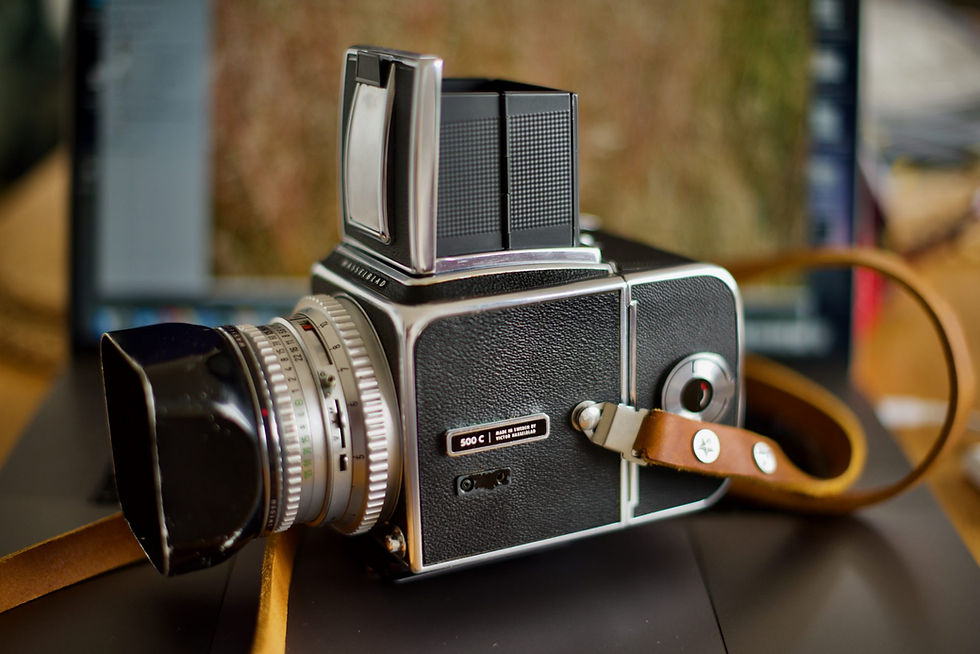
These days though it’s become even easier because you can see the picture that very moment, keep it if you like or delete it, compared to the olden days of film camera. Talking about photography at times brings back a nostalgic feeling, as I still shoot with film and that is what I enjoy the most. Coming back to my topic, “what is the right equipment for me?” Depending on your level of knowledge, the amount you want to spend, and how professionally you want to use the image, you can use anything from an iPhone to a Hasselblad and the final outcome will be the same to the viewer.
Please note that all equipment that I will discuss going forward is not necessary something you will need to buy, this is just a guideline and I am no way responsible for any equipment you will purchase and not need in the future.
For Hobbyist:
People who like to take pictures everywhere they go and everything they see, the quality does not matter, as long as they can upload it on their social media profile.
A high definition phone camera should be enough, as these camera do come with a flash inbuilt, drawback of these cameras is you are not completely in control of the camera. It is very hard to learn and progress in photography with these cameras. The quality of the images are also compromised and are only good enough for social media or small prints.
For starter or an amateur Photographer:
A good compact camera or a semi DSLR camera should be enough, as these camera do come with a flash inbuilt, drawback of these cameras are that, it is difficult to take pictures in the night or the quality of the image is compromised due to high ISO used and high grain in the image. It is a good stepping stone to professional DSLR cameras, and who want to take up photography as a professional seriously.
For Semi-Photographer:
A medium level camera such as a Nikon D90 or a Canon 90D, these are basically entry level DSLR cameras.
An entry level mirrorless camera like a Nikon Z50, Sony alpha 6400, Fujifilm XT-30 or Canon M50, these cameras are equally matched in terms of features, quality and Price.
I would recommend an external flash like a Nikon 910, Canon 600XE or a Godox, the lights will play a major part in overcoming the shadows of a sunny day or a nice light on a dark night, or night portrait photography
The drawback with this equipment is that they are expensive, heavy to carry and you will have to spend extra on the lens, therefore it is very important to select the right camera and invest once.
For Professionals:
This is where many go wrong and special attentions needs to be taken. Choosing the wrong equipment will not only discourage you to pursue photography as a career, but you will also loose a lot of money in either buying new equipment or buy clients not paying you well, as you will not be able to deliver desired results.
As a professional you will have to invest in a high end camera, this is the most hardest part, since you will have to understand the type of photographer you would like to be, for example for a wedding you will need a hybrid camera which does video as well as takes good images and has a wide range or lens. Sony a series or the Nikon Z series are a good choice, depending on your budget you can select a camera. If you want to be a wildlife or sports photographer you need a faster camera which can capture that perfect moment as there is a lot of movement with this kind of photography, like a Nikon D5 or a Canon 7D.
For an Indoor Studio you will need to spend more of Strobe lights, such as Elinchrom, Portalite, Godox and many more, are available in the market depending your budget.
You will also need to buy diffusers, reflectors, softboxes, umbrellas and other light accessories.
Backdrops and the stands for the backdrops.
These are some equipment you will need as any type of photographer, along with these equipment you will also need buy many other accessories such as,
Tripods
Camera bag
Memory cards and card readers
Remote shutter release (A very helpful accessory for night photography)
Lens Filters
Props (Mainly used in studios and weddings)
Software for editing (Be good with your pictures you may not need it)
Drones (Mainly for Weddings and Landscapes)
As the field of photography is evolving on a daily basis, you will need more accessories, these are a few basic accessories that I have mentioned.
It all comes down to ‘What you need? vs What you want’
When starting your photography, something that needs to be taken quite seriously is whether you need the equipment or you want it. To understand this better, let me explain you. A 50mm f/1.4 is an incredible camera lens to work with but for most people, a 50mm f/2.8 will be a more effective lens in terms of pricing and can achieve the same result. Buying your dream lens initially may seem to be a good idea, but in the long run it might not be a good investment for you and your bank balance, as you not get the desired returns.
When starting photography, there is some photography equipment that is necessary and some that can be postponed. Having a quality camera that suits your needs, a good selection of camera lenses for the type of work you will be doing, and lighting and camera accessories to help you deliver the best to your client.
There are 2 most important things in photography, one the person behind the camera and the other the subject in front of the camera.
Gear may not be the most important thing in producing creative images, but it is necessary, since you will need a certain amount of it. Choose it wisely and make sure you get the best tools for the job so that you can focus on what’s really important: “taking great pictures.”
-By Rahul Borges

Comments